Monday, 30 January 2017

Weekly film analysis: Hardcore Henry (2015)


‘Henry is resurrected from death with no memory, and he must save his wife from a telekinetic warlord with a plan to bio-engineer soldiers.’

Hardcore Henry was a 2015 Russian- American science fiction film written, co-produced and directed by IIya Naishuller and produced by Timur Bekmambetov. The themes of this film were mystery, death, violence, betrayal, etc. The production companies of this were Huayi Brothers Pictures and distributed by STX Entertainment. The language was set in mostly Russian and English. The budget of this film was $2-3 million and had a great box office of $14.3 million.
What makes this film stand out was that it was shot from a first-person perspective, which attracted a large audience range, especially people that enjoy FPOV video games. It made the film hugely engaging, making the audience feel as they was put on the spot of being Henry throughout the whole film.


The film starts off with a group of boys  bullying him, then goes in with the film credits showing red lighted scenes of guns, man being punched, already indicating that this film relates to violence, and death. The red shots could foreshadow danger of what’s about to come.  He finds himself awake in a bath found in a laboratory with a female scientist who later claims to be his wife. Already expressing the theme of love, makes the audience question why his wife wanted him back and why in a robotic form? Audience may question, why is his qualities needed? Both the wife and he is the protagonist and the antagonist would be Akan. Performance is used to show Akan’s qualities of being psychokinetic, which empowers his ‘villain like’ qualities, making us realise why Akan would want to take control of Henry and use him as his own. Towards the end of the film, the audience uncovers that his wife wasn’t actually his wife and was actually Akan’s wife who used her to set him up to betray him. Again, the micro feature of ‘performance’ makes it indicative nobody could be trusted and that Estelle was just used to manipulate soldiers like Henry. 

Sunday, 22 January 2017

Weekly Film Analysis: Dorian Gray (2009)

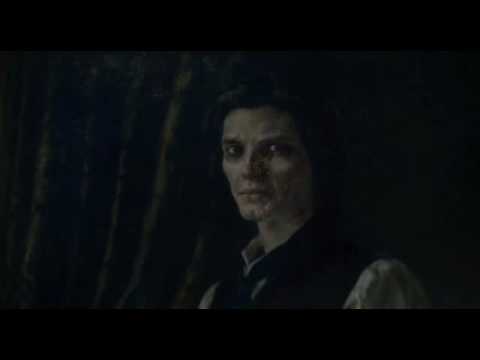
Picture of Dorian Grey (2009)
‘Young and powerful Dorian found himself slipping deeper and deeper into a world of sin, sex and celebrity, seemingly without any consequences. But a special painting gradually reveals his inner ugliness to all. How long can he hide the secret behind his eternal youth?’

Dorian Gray is a 2009 British fantasy drama and the themes that run throughout this film was love, hate, identity crisis, youth, beauty, sin, etc. This film was based on the novel of Oscar Wilde written in 1890.  This version was directed by Oliver Parker, written by Toby Finlay and cinematography by Roger Pratt. Production companies of this film were UK Film Council and distributed by Momentum Pictures. The location of the film was set in the UK and competed in the Official Fantastic competition in the Sites Film Festival. The box office of this was $22,410, 097 given the fact that the film already had a massive audience from the novel.

The use of performance showed by the protagonist (Dorian) portrays his naivety and innocence as he wasn’t aware of the lustful world out there. Lord Henry Wotton is the antagonist who influences Dorian into his bad behaviour making him become more sinful with his dignity. Lord Henry paints a picture of Dorian Gray, and the audience learn that Lord Henry actually falls in love with the beauty of his picture and makes Dorian feel that his beauty is all that matters in this society. The contradiction of homosexuality and the time zone of Victorian times was a complete contrast as being gay wasn’t acceptable in society.  Furthermore, the use of the protagonist Sybil made Dorian realise that he was led astray by Lord Henry by going to a brothel- she killed herself. Historically, women who had sex before marriage was seen as impure and drown themselves in the river- so she did and Dorian hit reality realising that she was also pregnant with his child. Performance also showed that Lord Henry had control over Dorian highly as he made him believe that the death of Sybil was an ‘experience to be learnt from, to make a man stronger’.

Mis en scene was highlighted by the picture of Dorian Gray. When Sybil died, Dorian looked at his painting and saw a maggot poke out of the painting of his eye, suggesting that his eyes are not seeing the harsh reality of misery he put Sybil through. Furthermore, the use of maggot coming out of the paintings eye could indicate that he needs to realise he’s under the influence f Lord Henry and that he needs to ‘open his eyes’.

'71 Analysis

‘A young British soldier is accidentally abandoned by his unit following a terrifying riot on the streets of Belfast in 1971. Unable to tell friend from foe, the raw recruit must survive the night alone and find his way to safety through a disorienting, alien and deadly landscape.’

is a 2014 British historical film in Northern Ireland and the themes  that runs throughout this film was war, brotherhood, violence, hate, etc. This was written by Gregory Burke and directed by Yann Demange. The production companies of this film were Film4, BFI Film Fund, Warp Film and distributed by StudioCanal. The budget of the film is £8.1 million and the box office of it is $3.2 million. Although a low box office, this film had a 96% rating of positives review by Rotten Tomatoes. The location of the film was set in Blackburn, Lancashire and continued in Sheffield and Liverpool.


Throughout the film the use of the microelement mis-en-scene shows the audience what type of environment they’re watching. This is shown through their military uniform, instantly making the audience aware it’s a war based film involving violence and conflict. This is also shown through their weapons/equipment and how they lacked it, showing how long-standing the history of the film is- as modern day soldiers are usually fully equipped. Furthermore, the public were wearing very old fashioned clothing giving the audience an insight of the time zone again. Moreover, the use of the colour in the scene (where he’s running away from the war) is shown in a grey tone, making the scene look very dusty, giving the themes of war, violence and fear. This is also shown through performance; the actors had an accent, which makes the film look more believable in the location it was set in.  The use of the soldiers little brother also shows the innocent backgrounds of the soldiers’ lives and how they actually have other meanings behind their life rather than fighting in a war. The theme shown through this was brotherhood, love and family. 

Saturday, 14 January 2017

Weekly Film Analysis: Gone Girl (2014)


Gone girl is a 2014 American psychological thriller and the themes that run throughout this film are lust, love, hate, revenge, disturbance, etc. This film was directed by David Fincher, written by Gillian Flynn based on the 2012 novel. This film stars the famous Ben Affleck (male protagonist) and Rosemund Pike (female antagonist).  The company productions of this film were Regency Enterprises and distributed by 20th Century Fox. The film was located in the United States, budget of the film was $61 million and box office came out to be $389.3 million. Rotten Tomatoes gives the film an approval rating of 88%, based on 281 reviews, with a rating average of 8/10. The site read: "Dark, intelligent, and stylish to a fault, Gone Girl plays to the strengths of director David Fincher while bringing the best out of stars Ben Affleck and Rosamund Pike”.


The scene starts with 20th century fox. The scene then starts with a narrative structure of a man talking about his wife, and stroking her head. Already, this shows the wife’s vulnerability and his dominance through performance. This is shown when she looks up to the camera, showing that the audience is in the eyes of the husband. He states ‘I picture cracking her lovely skull’ making him sound like he wants to kill her, making her look like the victim. In contrast, as the film goes on, we discover that the wife made him a diary to make him look like he kidnapped her when she was ‘gone’. This made him look like the culprit and really illuminated to the audience that the husband was the victim after all.

The use of light is used to show Amy’s dark, mentally ill behavior. A wide shot presents this clearly when she is facing her husband and one side of her face is shadowed. This gives an indication to the audience that half of her is innocent, vulnerable and kind and the other side shows that she is evil, dark, even potentially foreshadowing what she is capable of in this film. The microelement of performance shows that Amy is the antagonist as Nick tries to escape her psychotic behaviour as he found out what she is capable of and Amy reveals she is pregnant, having artificially inseminated herself with Nick's sperm stored at a fertility clinic. Nick doubts the child is his and says he will undertake a paternity test. Nick reacts violently to Amy's firmness that they remain married, but feels responsible for the child. Despite nick’s objections, he reluctantly decides to stay with Amy. The "happy" couple announces on television that they are having a child. The theme presented here is isolation, trapped and fear as he couldn’t leave her due to a child.


Monday, 9 January 2017

Weekly Film Analysis: Brotherhood 2016


‘First, there was Kidulthood, then Adulthood, and now comes Noel Clarke's last instalment: Brotherhood. With Sam facing up to the new world, he realizes it also comes with new problems and new challenges that he must face that he knows, will require old friends to help him survive new dangers.’

Brotherhood is a British Drama and the themes that run throughout this film is exploitation, money, revenge, greed, crime, family, betrayal, love and loss. This film was made in 2016, made a spinoff of the film Adulthood. This was written and directed by Noel Clarke who also starred as the male protagonist of this film, cinematography by Aaron Reid and music by Tom Linden. The location of the film was set in United Kingdom. This was distributed by Lionsgate (UK)and was screened at the 2016 Toronto International Film Festival.

Story was based on gang violence, knowing the storyline of Adulthood, Sam (protagonist) realises that his remorseful past catches up to him, involving his family as his weakness to get into the old lifestyle he had. In the opening scene, shows Sam matured and not like how he was presented in Adulthood. This scene uses flashback scenes from Adulthood to give a sort of recap to the audience, in order for them to link the stories together. The last flash back scene is of Sam with blood dripping down his face, which suggests that the darkness around him connotes that the ‘old sam’ has died and that he has a new beginning. The scene cuts off saying ’10 years later’ showing the audience a new time zone and a new generation of teenagers involved in this lifestyle, which potentially foreshadows already that his past is catching up to him. The next scene shows people at the ages around 18-24 at a gig dancing, contrasting performance of urban rappers, hip hop jazz music being played.  As the performance goes on, a young boy shoots the main star, also known as Sam’s brother and leaves a note saying ‘for Sam Pell’.


Already, in six minutes we uncover a lot about Sam. Wide shots of the estate and trains going past gives the audience an insight of where Sam and his family live, which links to the reality of crime and social realism. It then shows Sam travelling to different places as a cleaner, kitchen worker, etc. showing that he is working hard in the right way.  A wide shot view shows Sam looking into the mirror at Gym; he slaps the fat on his belly as humorous encounter, showing his new life is what he’s happy with. Mis en scene is used to show a family portrait of his wife and children, signifying why he is working hard and his maturity have developed as he is a father.  His wife states that he is very involved with his work and isn’t physically there for his children and wants to be surprised at a brunch they go to in the morning. Towards the end of the film when he goes through all his loss, challenges and fights, he splits the money with his brother, friend from past, and his wife, he goes to see her at the morning brunch they go to, which signified that he’s finally here for his children and wasn’t there before as he was protecting them against his past.